Greenland Runoff Monitoring using Passive Seismics

Leverett Glacier Fieldwork Complete, July 2026

Tifenn Le Bris gives an overview of fieldwork at Leverett Glacier

In July 2026, a field campaign was conducted at the Leverett Glacier study site with members of the GRuMPS team and collaborators. The mission had three main objectives:

  1. To perform maintenance on the GRuMPS project’s gauging and seismic stations.
  2. To deploy Cryoeggs in a moulin on the Leverett Glacier
  3. To collect water, gas, and sediment samples for a parallel geochemistry project.

The mission took place from 6-29 July and was carried out by a small team of between three and six people over the course of three weeks. We had the privilege of hosting, for two days, a team of Sky News journalists who came to cover our activities (see GRuMPS Fieldwork Update - 23 July 2026). We also welcomed photographer Elvar Orn, who spent a week with us documenting our fieldwork.

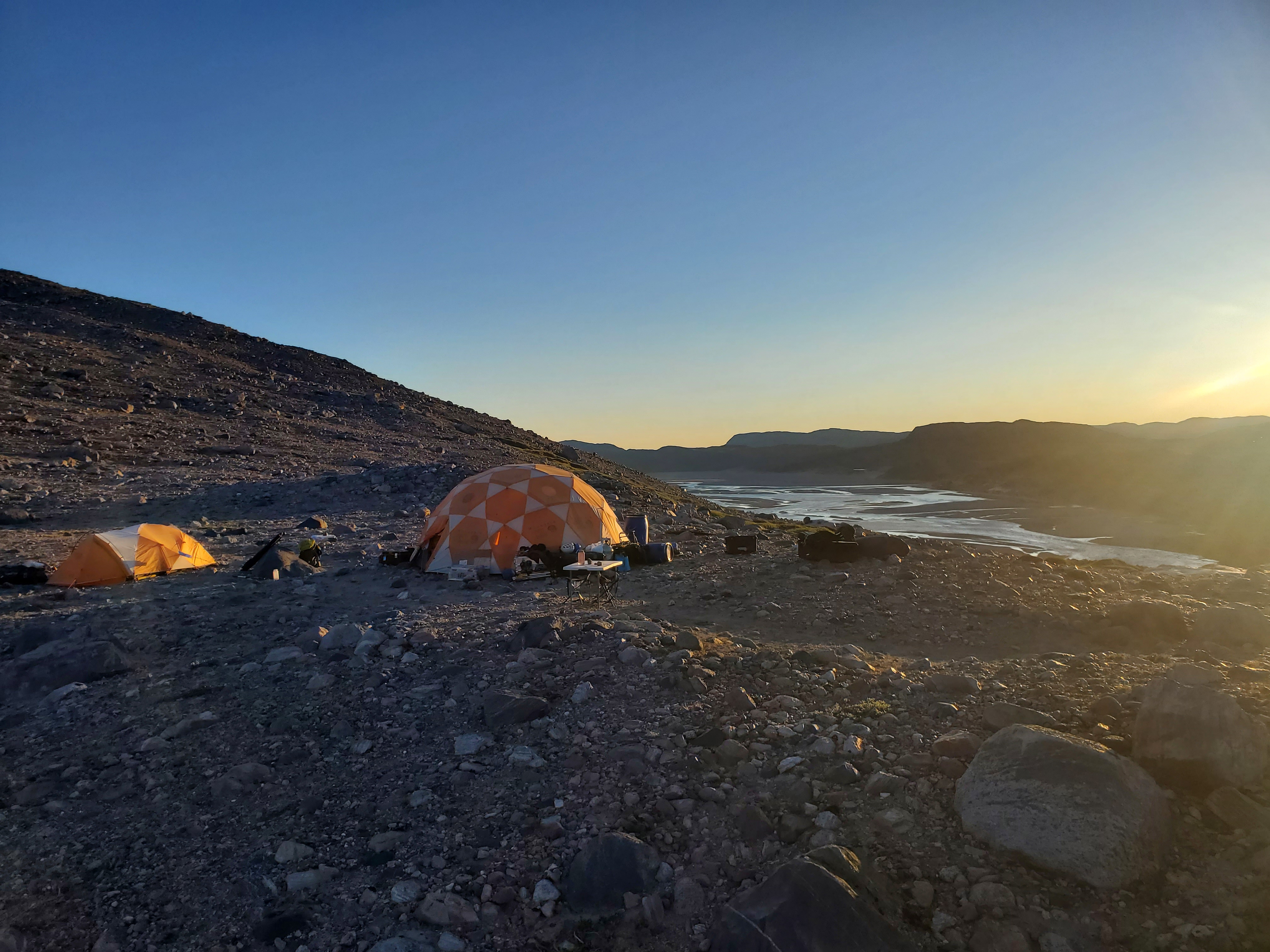
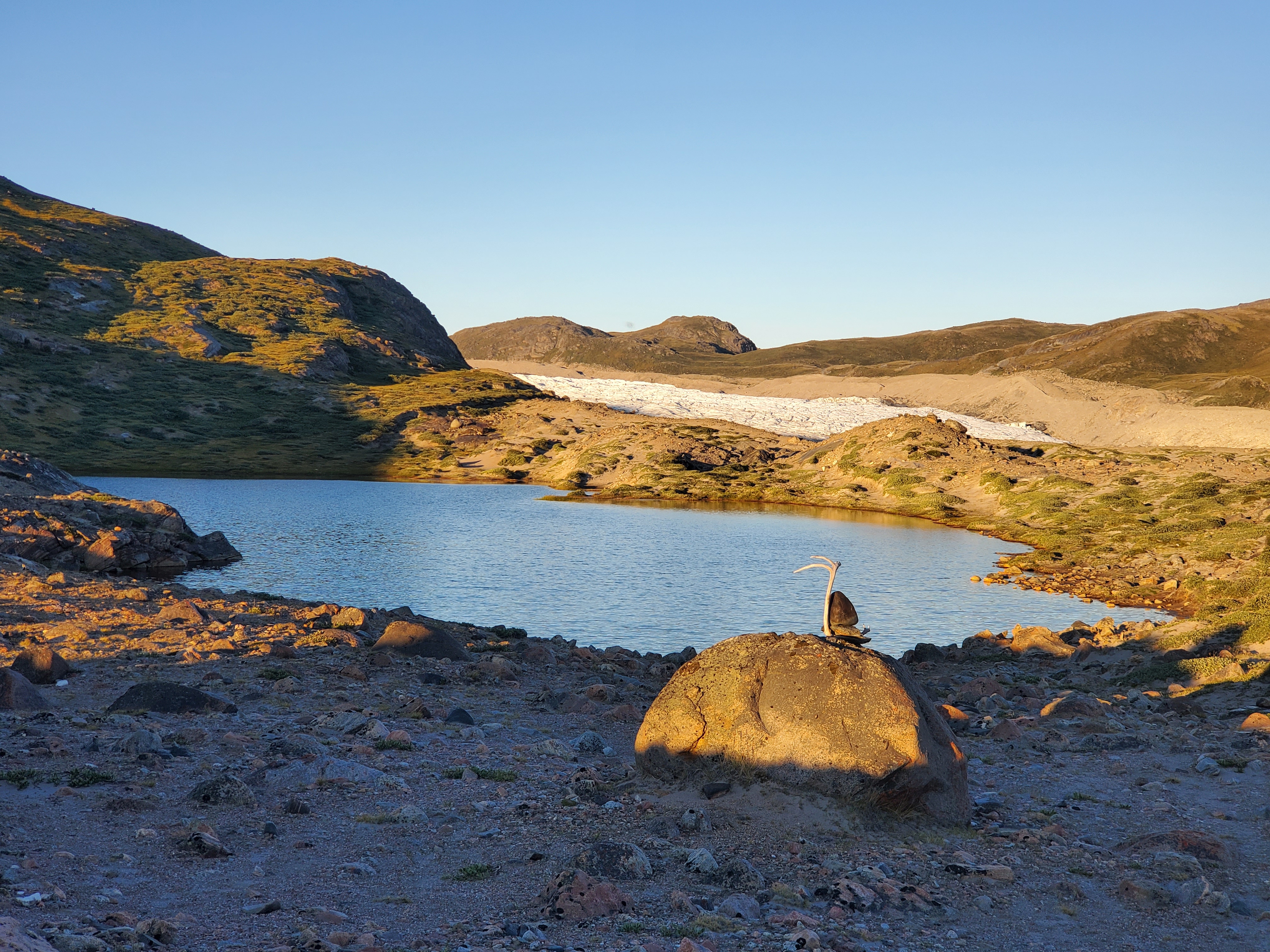
The camp was set up higher up than April’s camp, to be close to a lake and have access to drinking water. This site was accessible either by helicopter or by crossing a river using a small boat. We enjoyed high temperatures and mild weather, with daytime temperatures ranging from 10°C to 15°C and clear blue skies.
Seismometer next to glacier
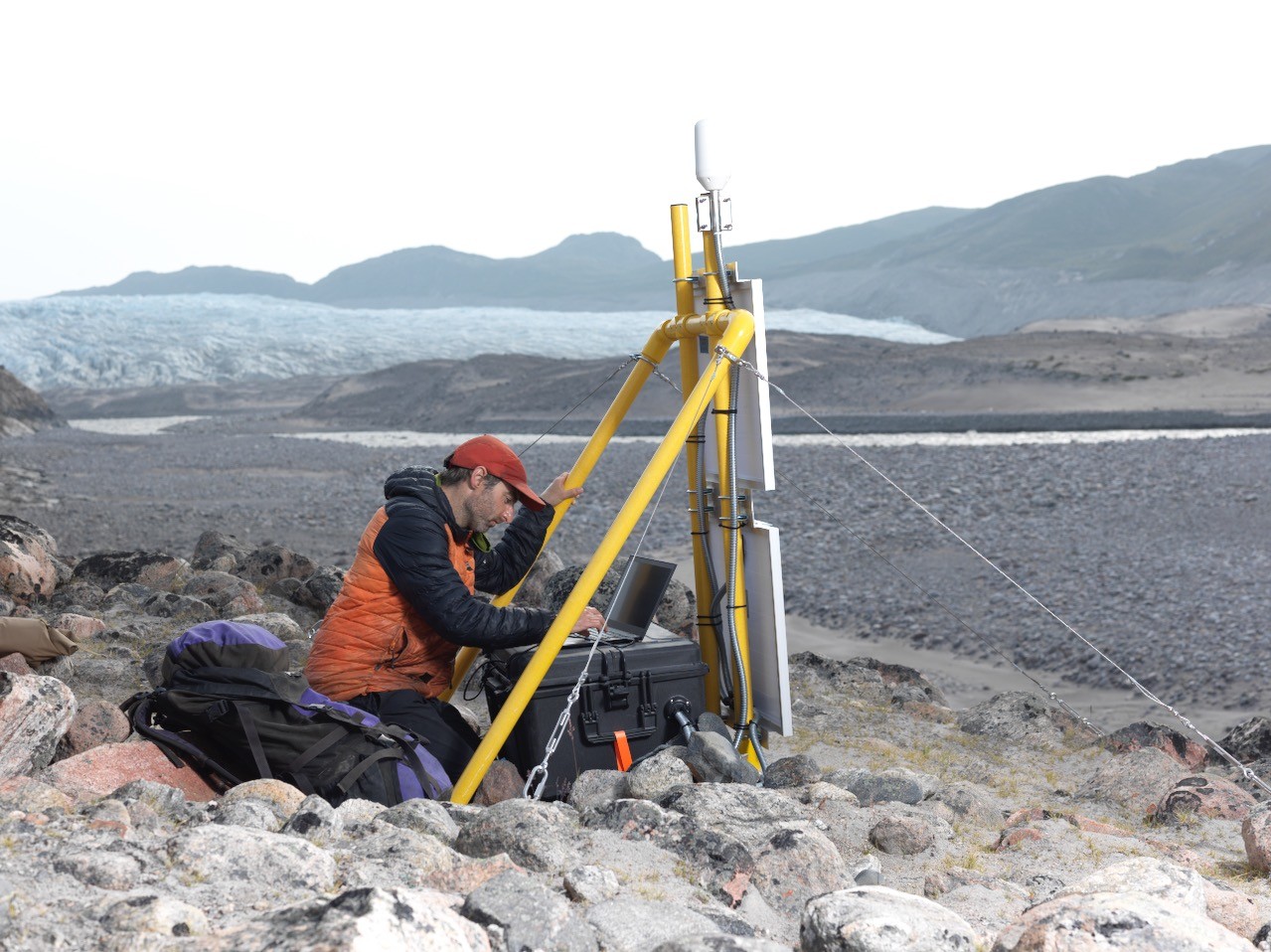
Seismometer next to the proglacial river
(left) Mess and science tents at the July camp, with the valley in the background. (right) The lake next to the camp, with Leverett Glacier visible in the background.
Passive seismic station at the lake terminating glacier.
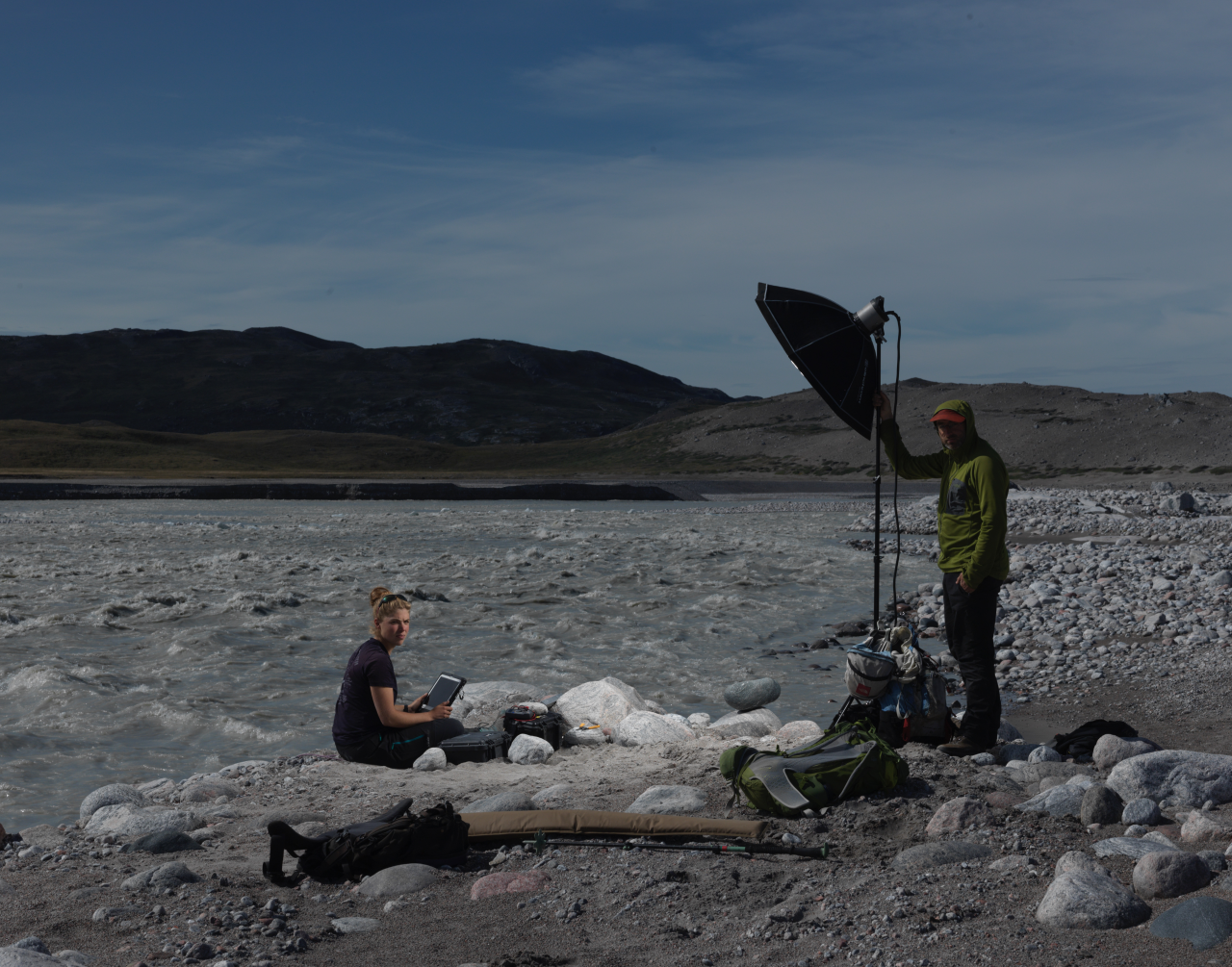
Behind the scenes of Elvar’s setup to photograph Jane working on the pH sensor, with Sam assisting with the lighting.
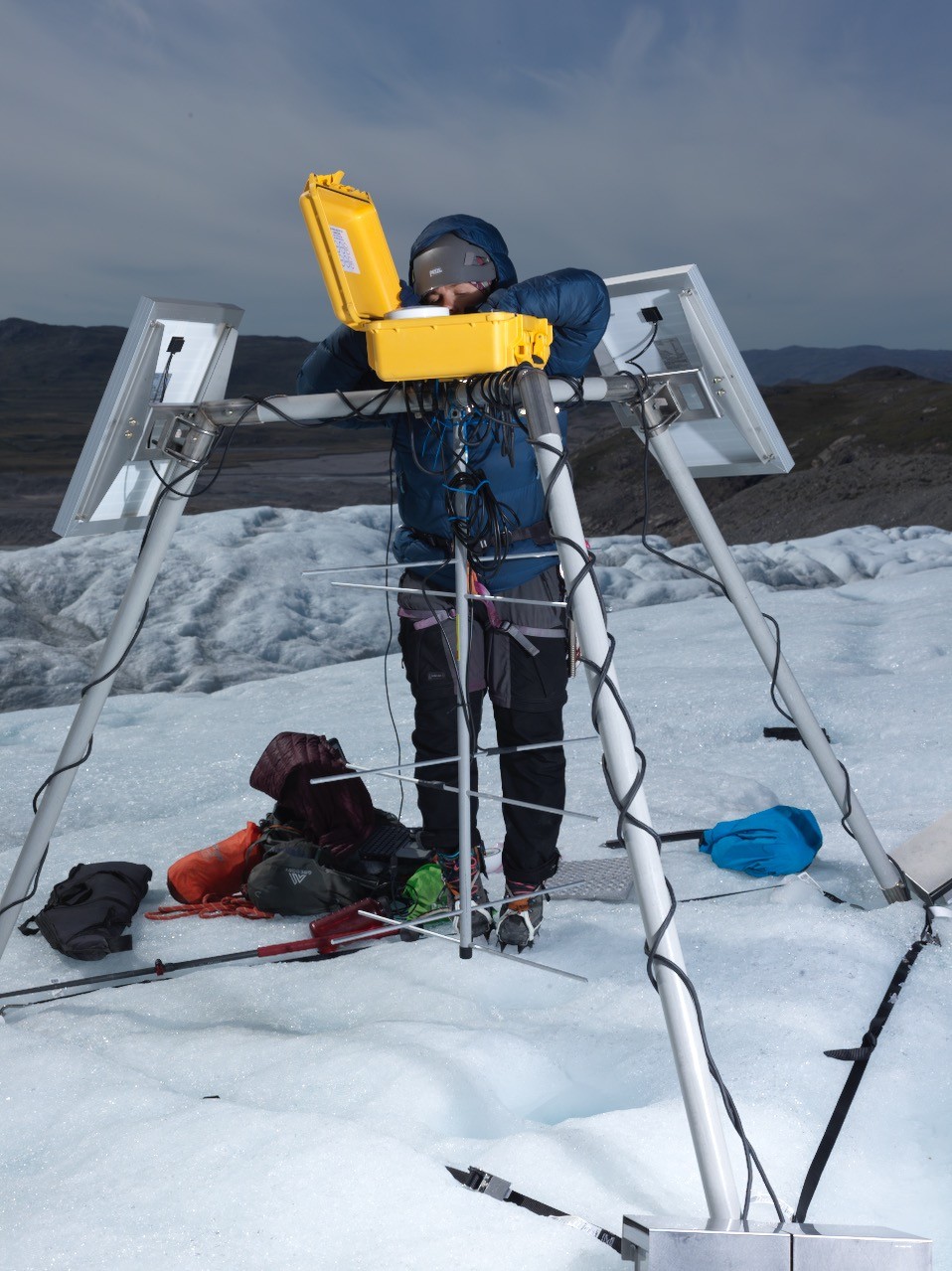
The first set of tasks involved maintaining the three seismic stations installed in April. All three stations were found to be in working order, and the telemetry system installed at one of the stations was functioning properly. Maintenance of the gauging station also proved straightforward, with most components operating correctly. The goal is for all these stations to continue operating autonomously until spring/summer 2027, when the next maintenance campaign is planned. Finally, we successfully retrieved the Stryde node diamonds deployed back in April.

Passive seismic station at the lake terminating glacier.
Sam servicing seismic station QS2P1, photographed by Elvar Orn.
The second task aimed at deploying Cryoeggs in a moulin on the Leverett Glacier. To do this, we first had to build the Cryoegg receiver. This receiver captures data packets sent by the Cryoeggs via radio signal before relaying them via satellite to the UK. Several tests were conducted to deploy the Cryoeggs, with some attached to a rope for static measurements and others released to flow through the glacial meltwater network. As of mid-August 2026, we are still regularly receiving data from the Cryoeggs.

Passive seismic station at the lake terminating glacier.
Tifenn working on the Cryoegg receiver, photographed by Elvar Orn.


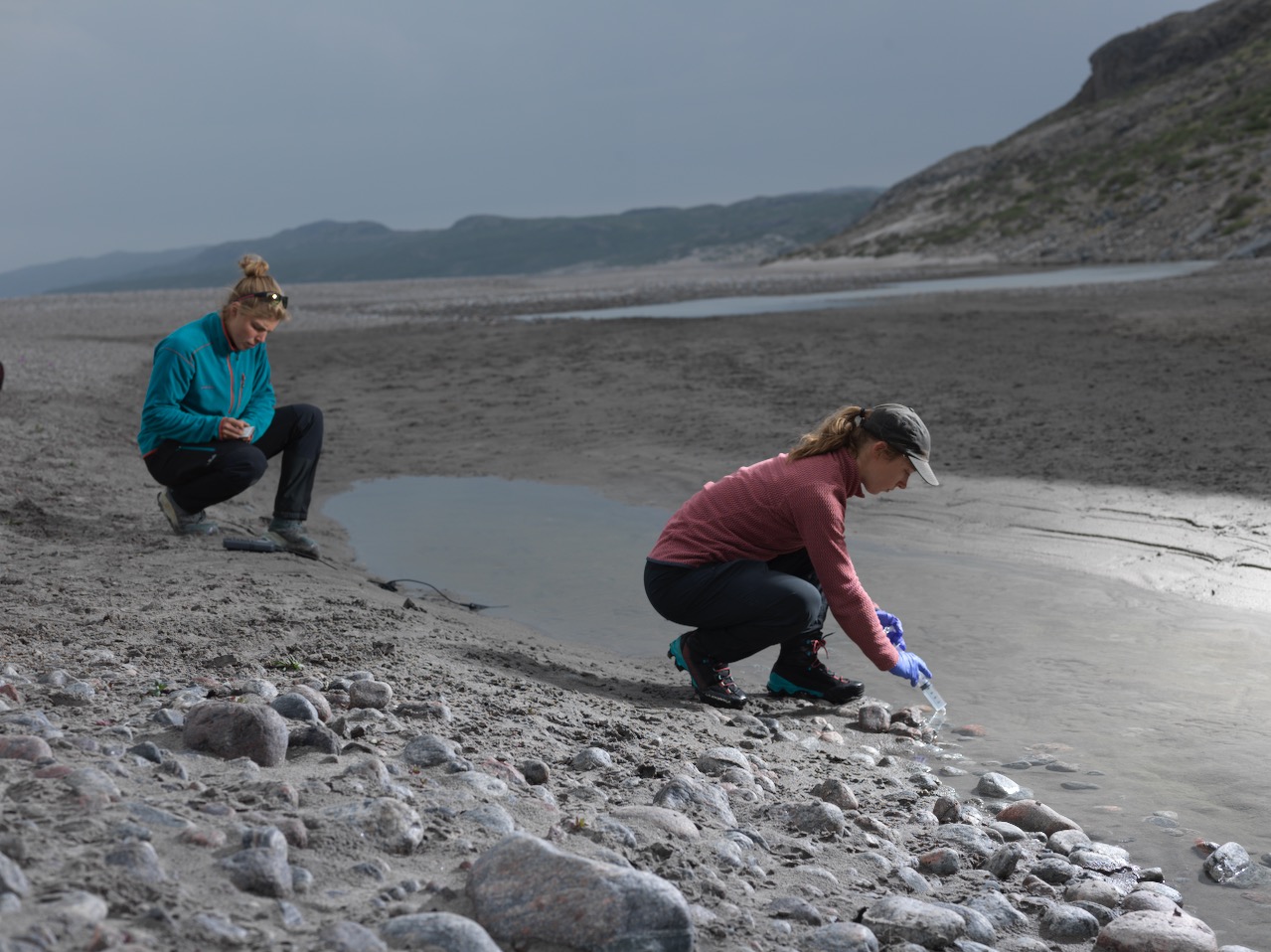
The third set of tasks involved collecting water, gas, and sediment samples at various locations throughout the area, ranging from the supraglacial streams of the Leverett Glacier to the outlet river and ponds formed by permafrost melt. Sampling included daily sessions, both in the morning and evening, along the riverbank, about 10 minutes from camp. pH, CO₂, and CH₄ sensors were also installed in the river for several days. All these data will be used as part of a doctoral research project and a Master's thesis.
Passive seismic station at the lake terminating glacier.
Jane and Leah conducting water sampling and pH measurement in a pond, photographed by Elvar Orn.
It was a long mission for the team, but the great atmosphere, swims in the lake, and numerous wildlife sightings made the days of hard work worthwhile.